Four threads run through most of what I do, and they have been converging for a while: the surveys taught us where obscured black holes hide, the hard X-ray work told us how much we were missing, and polarimetry is now giving us the geometry that neither could. A fifth is older and far more occasional — analytic theory, which is where I started.
X-ray polarimetry
Polarization measures something spectra and light curves cannot: the geometry and orientation of the material around an accreting black hole. IXPE made this a routine observable for the first time, and much of my current work is spent turning that capability into results — both running the mission's science operations and using it.
With colleagues I measured the X-ray and multiwavelength polarization of the blazar Mrk 501 across 2022–2023. As PI I hold a 1 Ms IXPE program targeting the first X-ray polarization measurement of the polar-scattered Seyfert 1 Fairall 51, with a complementary NuSTAR program for broad-band X-ray spectropolarimetry of the same source.
Black hole growth and galaxy coevolution
Nearly every massive galaxy hosts a supermassive black hole whose mass tracks the galaxy's bulge. The question is what physically ties the two together over cosmic time — and whether the link is causal or just a shared gas supply.
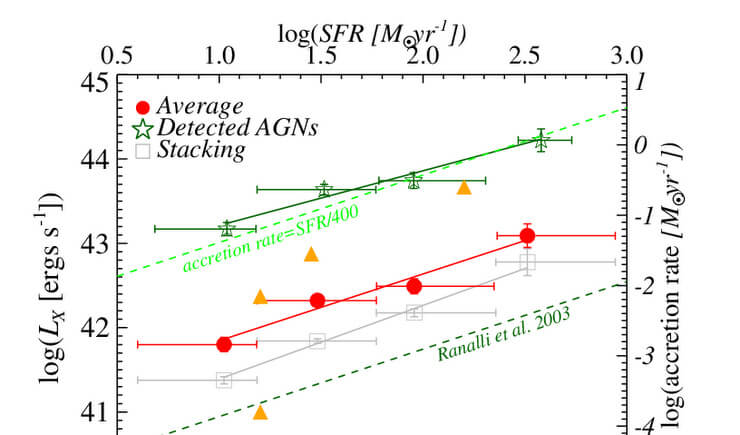
Because black hole accretion varies far more quickly than star formation does, individual snapshots mislead. Working with averages over star-forming galaxies rather than AGN alone, we found black hole accretion rate tracks star formation rate closely. Later work with Guang Yang showed that growth is linked mainly to host stellar mass rather than star formation rate, and separate work on luminous quasars found a direct connection between obscuration and star formation — consistent with rapid growth happening while the black hole is still dust-enshrouded.
Obscured and low-mass AGN in hard X-rays
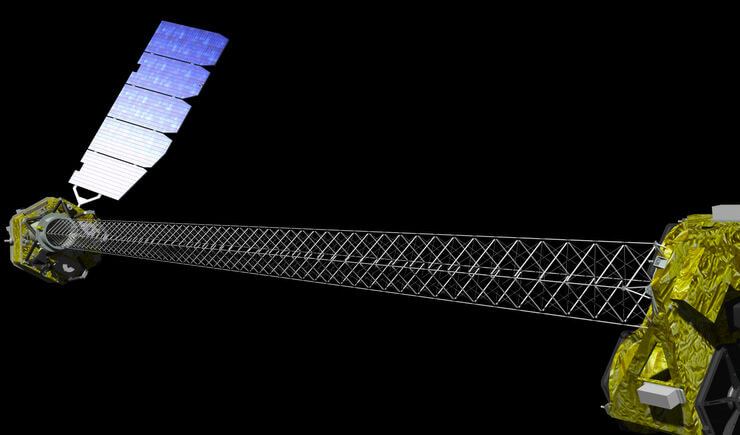
Heavily obscured black holes are the ones most easily missed, and they are exactly the ones that matter for a complete census. Hard X-rays penetrate the obscuring material, so NuSTAR can see accretion that softer bands lose entirely.
Using the NuSTAR serendipitous survey I searched for hard X-ray emission from dwarf and low-mass galaxies. The population matters beyond bookkeeping: how common accreting black holes are in dwarf galaxies constrains how the first black hole seeds formed in the early universe. A later study identified a heavily obscured AGN in the dwarf galaxy J144013+024744.
Wide-area X-ray surveys
Answering population questions needs both depth and area — enough sky to beat cosmic variance, deep enough to catch faint and obscured sources. That trade-off is what survey design is really about.
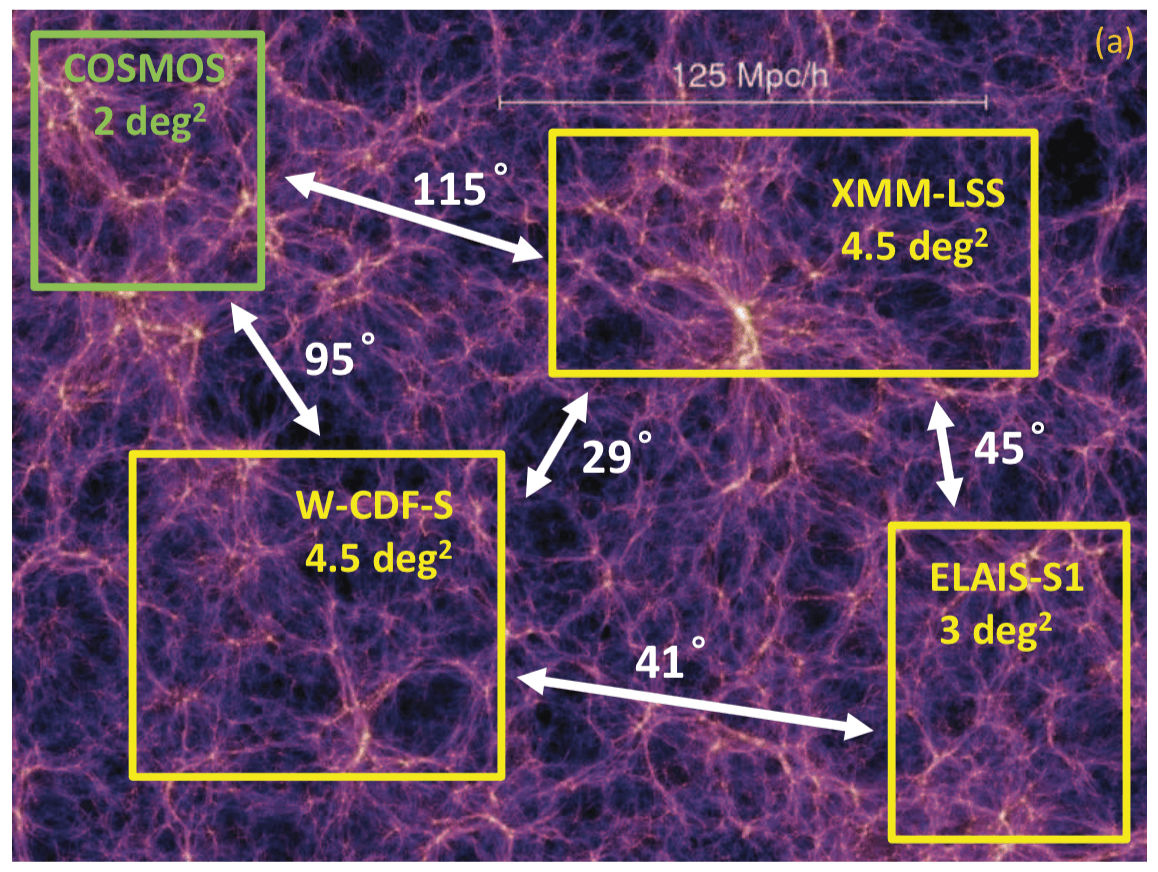
I was lead Co-Investigator on XMM-SERVS, a multi-year XMM-Newton heritage programme totalling 3.4 Ms across the XMM-LSS, W-CDF-S and ELAIS-S1 fields, built to detect the bulk of faint and obscured AGN out to redshift 2. I also led the science for the U.S. archive of SRG/ART-XC data, and hold a NuSTAR programme surveying the ART-XC North Ecliptic Pole catalog.
Theoretical astrophysics
Most of what I do is observational, but not all of it. This thread began as my master's thesis and was finally submitted to ApJ nearly two decades later. JWST has turned up supermassive black holes at redshift 6 and beyond, including quasars above ten billion solar masses, which leaves remarkably little time for them to have grown — so the efficiency of the formation process itself starts to matter.
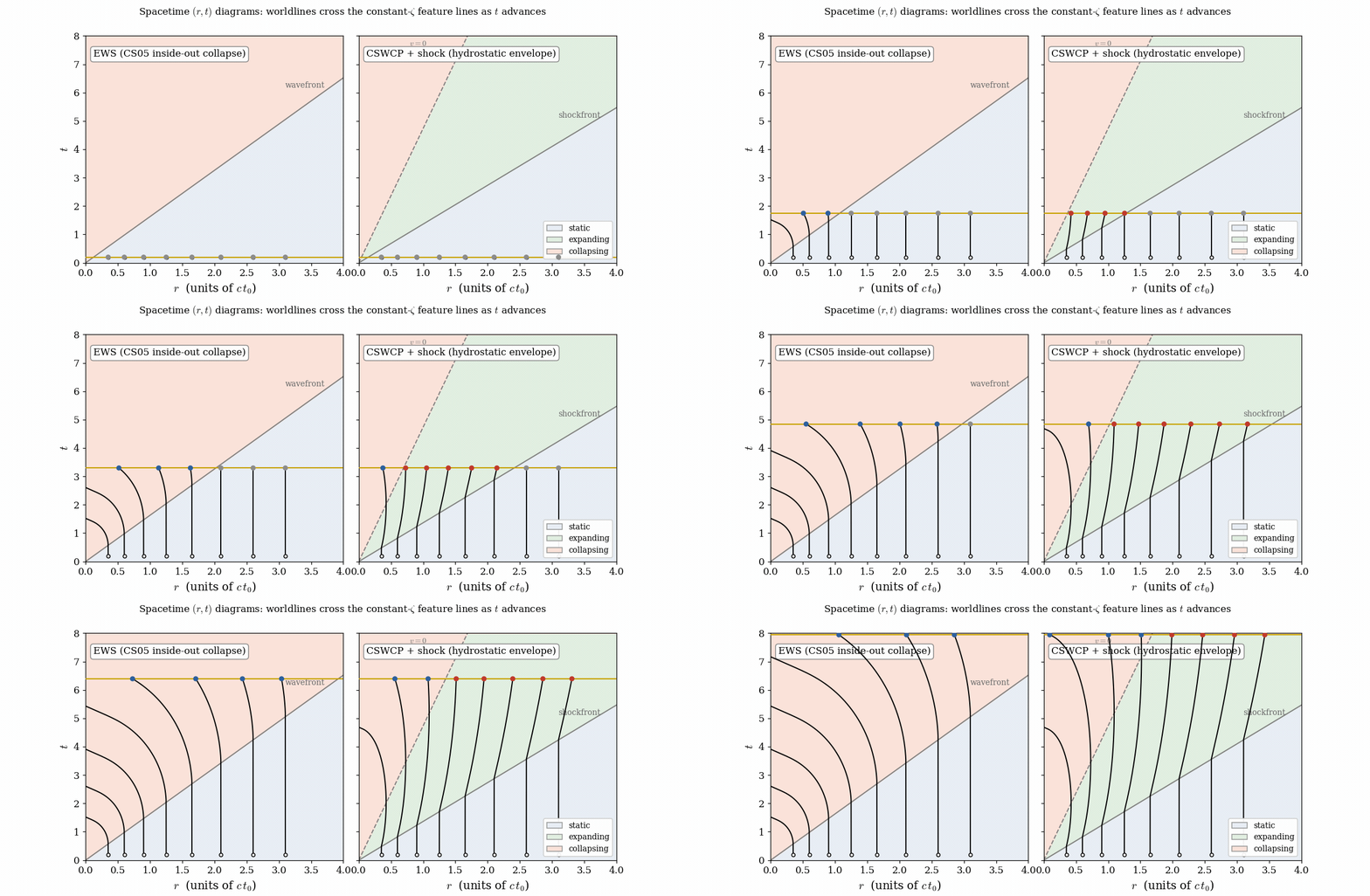
The smooth collapse of a singular isothermal sphere into a black hole had already been solved analytically in full general relativity. The shock waves that inevitably accompany such a collapse had not. With Michael Cai and Fabio Pacucci I derived the general relativistic jump conditions for an isothermal fluid and the self-similar shock solutions that follow, extending the Cai & Shu framework to discontinuous flows.
Those shocks travel at up to 40% of the speed of light. They suppress the central accretion rate by a factor of five to seven relative to the smooth solution, while releasing around 10% of the enclosed rest mass — nearly twice the radiative efficiency of accretion onto the finished black hole. The result is an analytic energy budget for direct-collapse black hole formation, with consequences for seed assembly, the dense cocoons around nascent high-redshift black holes, JWST's Little Red Dots, and relativistic transients such as gamma-ray bursts. Read the paper.
Selected publications
- C.-T. J. Chen, M. J. Cai, and F. Pacucci, "General relativistic shock wave solutions with black hole formation: the singular isothermal sphere case," arXiv e-prints, Jun. 2026, submitted to ApJ. arXiv:2606.29607
- C.-T. J. Chen, I. Liodakis, R. Middei, D. E. Kim, et al., "X-ray and multiwavelength polarization of Mrk 501 from 2022 to 2023," The Astrophysical Journal, vol. 974, no. 1, p. 50, Oct. 2024. doi:10.3847/1538-4357/ad63a1
- S. Ansh, C.-T. J. Chen, W. N. Brandt, C. E. Hood, et al., "NuSTAR observations of a heavily X-ray-obscured AGN in the dwarf galaxy J144013+024744," The Astrophysical Journal, vol. 942, no. 2, p. 82, Jan. 2023. doi:10.3847/1538-4357/ac9382
- C.-T. J. Chen, W. N. Brandt, A. E. Reines, G. Lansbury, et al., "Hard X-ray-selected AGN in low-mass galaxies from the NuSTAR serendipitous survey," The Astrophysical Journal, vol. 837, no. 1, p. 48, Mar. 2017. doi:10.3847/1538-4357/aa5d5b
- C.-T. J. Chen, R. C. Hickox, A. D. Goulding, D. Stern, et al., "The X-ray and mid-infrared luminosities in luminous type 1 quasars," The Astrophysical Journal, vol. 837, no. 2, p. 145, Mar. 2017. doi:10.3847/1538-4357/837/2/145
- G. Yang, C.-T. J. Chen, F. Vito, W. N. Brandt, et al., "Black hole growth is mainly linked to host-galaxy stellar mass rather than star formation rate," The Astrophysical Journal, vol. 842, no. 2, p. 72, Jun. 2017. doi:10.3847/1538-4357/aa7564
- C.-T. J. Chen, R. C. Hickox, S. Alberts, C. M. Harrison, et al., "A connection between obscuration and star formation in luminous quasars," The Astrophysical Journal, vol. 802, no. 1, p. 50, Mar. 2015. doi:10.1088/0004-637X/802/1/50
- C.-T. J. Chen, R. C. Hickox, S. Alberts, M. Brodwin, et al., "A correlation between star formation rate and average black hole accretion in star-forming galaxies," The Astrophysical Journal, vol. 773, no. 1, p. 3, Jul. 2013. doi:10.1088/0004-637X/773/1/3
Over 40 peer-reviewed publications as first or contributing author, plus more than 100 further papers as part of collaboration teams including the IXPE Science Working Groups, the High Energy X-ray Probe concept study team, and XMM-SERVS.
Programs and grants
PI or lead role for grants totalling approximately $2M in research funding.